
Car Accidents · Property Damage
Florida Diminished Value Claims: What You Need to Know
Even a flawless repair can’t erase a crash from your car’s history. Here’s when a Florida diminished value claim can recover that lost value from the at-fault driver, and how to back up the number.
Written by the Hughes & Barnard Law Firm, P.A. marketing team·Prepared for review by Attorney Howard M. Hughes·Attorney review pending·9 min read
The short answer
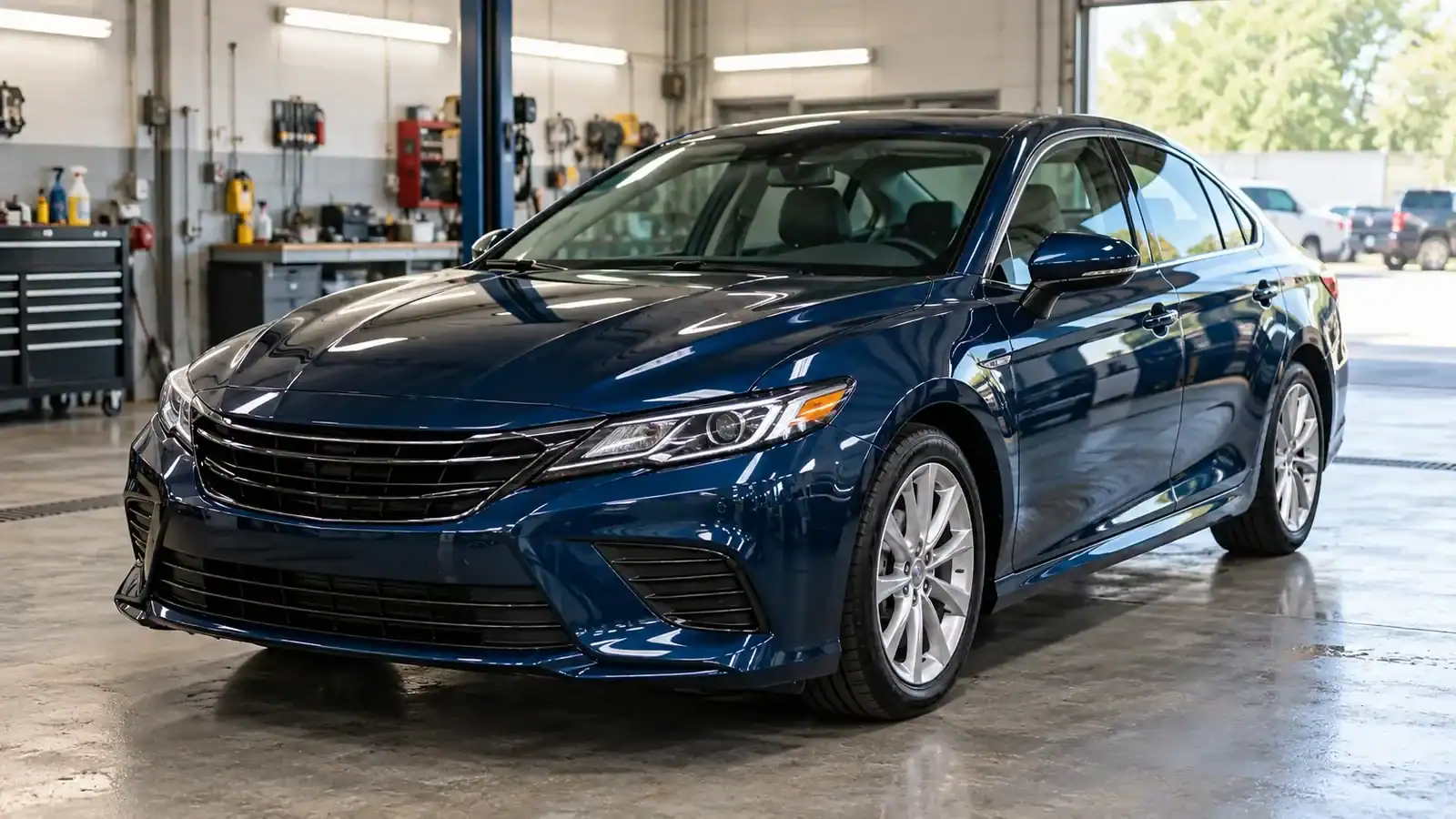
If another driver caused your crash, Florida law generally allows you to claim “diminished value,” the drop in your car’s market value that remains even after proper repairs, as part of your property damage claim against that driver’s insurer. Your own collision coverage usually won’t pay it: in Siegle v. Progressive Consumers Insurance Co. (2002), the Florida Supreme Court held that a policy letting the insurer repair or replace the car didn’t cover diminished value.
- These claims make the most sense for newer or higher-value vehicles with significant damage.
- Florida’s required minimum property damage liability coverage is only $10,000, so the at-fault driver’s limits may cap what the insurer pays.
- For crashes after March 24, 2023, plan on resolving the claim, or filing suit, within two years of the crash.
In this article
- What “diminished value” means
- Can you claim it from your own insurer? Usually not
- Claims against the at-fault driver’s insurer
- How to measure diminished value
- What to gather before you make the claim
- How to file a diminished value claim in Florida
- Limits that can reduce what you recover
- How it fits with an injury claim
- How long you have
- Frequently asked questions
What “diminished value” means
When a car has been in a crash, buyers and dealers pay less for it, even if the shop did the repairs correctly. Vehicle history reports often show the accident, and many buyers simply prefer a car with a clean history. The gap between what your car would have been worth without the crash and what it’s worth after repairs is its diminished value.
You’ll see the loss described a few different ways:
- Inherent diminished value: the loss that remains after high-quality repairs, simply because the car now has an accident history. This is what most claims are about.
- Repair-related diminished value: extra loss caused by poor repairs, mismatched paint, or lower-quality parts.
- Immediate diminished value: the drop in value right after the crash, before repairs. It’s an alternative way to measure the loss, used mainly when you don’t repair the car, and you can’t add it on top of repair costs.
A hypothetical example
A two-year-old SUV is worth about $38,000 before a crash. A shop repairs it properly for $9,000, but it now has a reported accident. Comparable SUVs with clean histories still sell for about $38,000, while comparable SUVs with a reported accident sell for about $33,000. That roughly $5,000 difference represents the diminished value, separate from the $9,000 repair bill.
Can you claim it from your own insurer? Usually not
Florida draws a sharp line between first-party claims under your own policy and third-party claims against the driver who caused the crash. In Siegle v. Progressive Consumers Insurance Co., 819 So. 2d 732 (Fla. 2002), the policy allowed the insurer to pay for the loss or to “repair or replace damaged or stolen property with other of like kind and quality.” After a proper repair, the Florida Supreme Court held that diminished value was “a loss not covered by this policy,” and noted that drivers who want that coverage can contract for it. Policy wording varies, so check yours, but most collision policies use similar repair-or-replace language.
Claims against the at-fault driver’s insurer
A claim against the driver who caused the crash is a claim for the damage that driver did, and Florida courts have held that it can include the value the car lost. In McHale v. Farm Bureau Mutual Insurance Co., 409 So. 2d 238 (Fla. 3d DCA 1982), the court held that when repairs don’t put the car back in as good a condition as before, the cost of repairs plus the diminution in value “will ordinarily be the proper measure of damages,” with the burden on the owner to prove the car lost value “by virtue of the vehicle having been involved in the accident.” The Florida Department of Financial Services summarizes it this way: Florida courts have agreed diminished value may be a covered loss in a third-party property damage claim, but not a first-party claim.
| Who you claim against | Can you usually recover diminished value? | Why |
|---|---|---|
| Your own collision coverage | Generally no | Siegle: a repair-or-replace policy didn’t cover diminished value |
| The at-fault driver’s property damage liability coverage | Generally yes | Tort damages can include the value your car lost even after repairs |
| Your own uninsured motorist coverage | No | Florida UM coverage applies to bodily injury, not vehicle damage |
| An uninsured at-fault driver personally | Possibly | You would have to sue the driver and collect the judgment |
How to measure diminished value
There’s no fixed percentage in Florida law. The Department of Financial Services notes that Florida’s statutes don’t directly address diminished value or specify a method for calculating it, and that the person making the claim has the burden of proving the loss exists and how large it is. The question is what the market would pay for your car with and without the crash in its history.
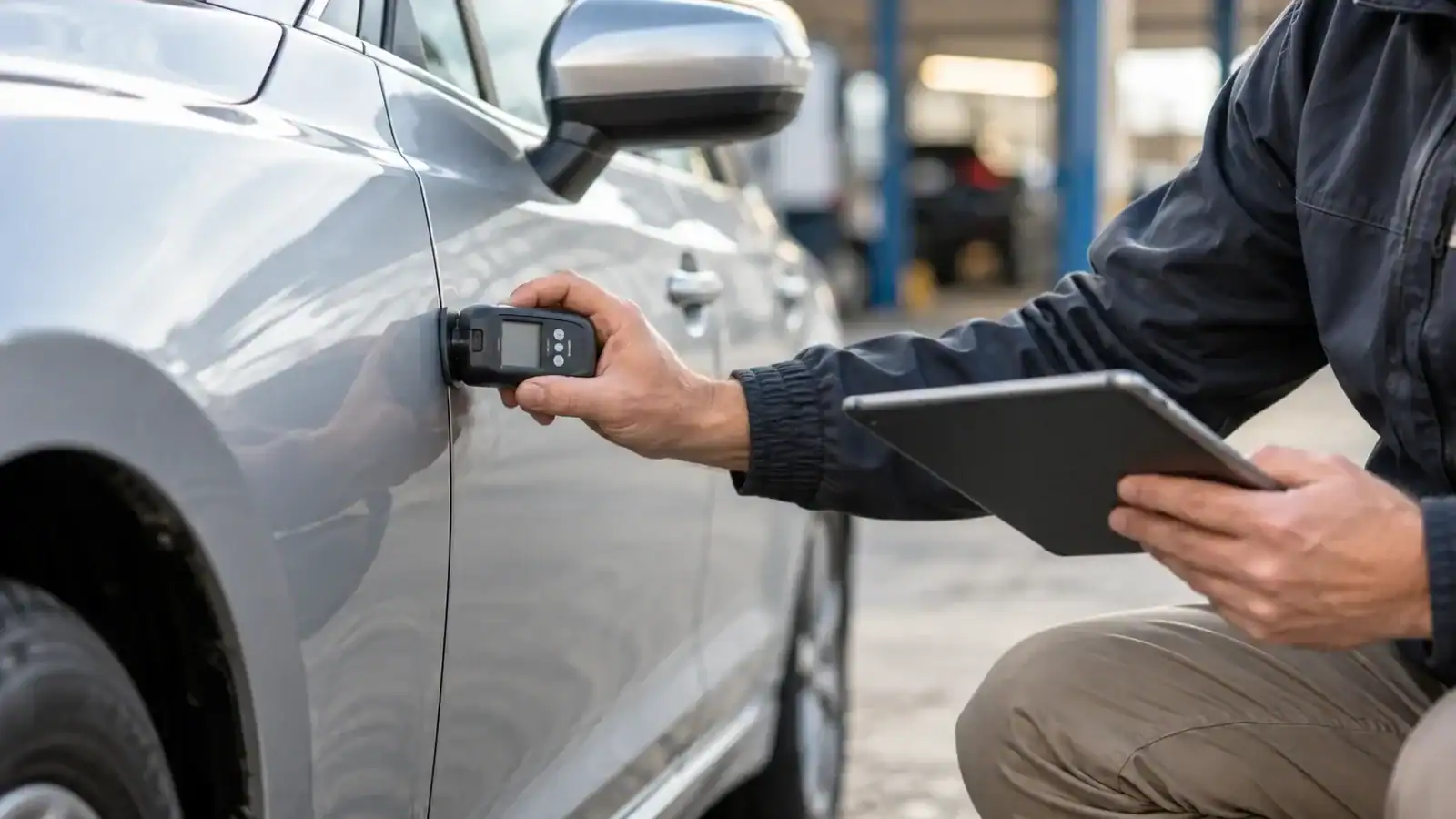
The most persuasive evidence is usually an independent appraisal that compares your vehicle to similar ones that have sold, accounts for the accident on the vehicle history report, and inspects the quality of the repairs. Some insurers use internal formulas that start from a percentage of the car’s value and then apply reductions for damage severity and mileage. Those formulas often produce lower figures than a market-based appraisal, which is why an appraisal from someone who doesn’t work for the insurer matters.
Repair costs and diminished value are different losses
$38,000 before the crash
Hypothetical market value of a two-year-old SUV with a clean history.
$33,000 after proper repairs
Hypothetical market value with the accident in its history.
$5,000 in diminished value
The remaining loss, separate from the hypothetical $9,000 repair bill.
Illustrative figures only. An actual claim requires evidence of market loss and depends on fault, policy limits and the facts.
What to gather before you make the claim
- The final repair invoice, showing whether the shop used original equipment manufacturer (OEM) or aftermarket parts
- Photos of the damage before repairs and of the car after repairs
- Proof of the car’s pre-crash condition, such as service records and mileage
- A vehicle history report showing the accident
- An independent post-repair diminished value appraisal
- The crash report and the at-fault driver’s insurance and claim information
- Every letter and email exchanged with the insurer
How to file a diminished value claim in Florida
- Confirm the at-fault driver’s insurer and open a property damage claim.
- Finish the repairs, or at least have a complete estimate if you won’t repair the vehicle.
- Get an independent appraisal after repairs so the appraiser can evaluate the finished work.
- Send a written demand with the appraisal and supporting documents.
- Negotiate, and keep everything in writing.
- Read any release carefully. A release for “all property damage” that you sign when the insurer pays the repair claim can end your right to pursue diminished value later.
If the insurer won’t pay a fair amount, you may be eligible for the Department of Financial Services’ automobile mediation program, which is open to property damage claims against the other driver’s insurer. Otherwise, the remaining option is usually a lawsuit against the at-fault driver.
Free consultation
Hurt in the crash too? Talk to us before you sign anything.
A property damage release can affect more than you expect. Tell us what happened and we’ll explain your options for the injury claim and the vehicle, at no cost.
No obligation · Se habla español · Home and hospital visits available
Limits that can reduce what you recover
The at-fault driver’s coverage limit. Florida requires drivers to carry at least $10,000 in property damage liability coverage under section 324.022 of the Florida Statutes. On a newer car, repairs alone can use up most or all of that amount, leaving little for diminished value unless the driver carries higher limits or you pursue the driver directly.
Shared fault. Florida’s comparative fault rules apply to property damage claims too. Your share of fault reduces your recovery, and in lawsuits filed after March 24, 2023, you generally can’t recover anything if you’re more than 50% at fault.
Leased cars. If you lease the car, the leasing company owns it and may control the diminished value claim. Check your lease before you file.
Total losses. If the insurer declares the car a total loss, there’s no diminished value claim; the question becomes the car’s actual cash value.
How it fits with an injury claim
Diminished value is a property claim. If the crash also injured you, your medical bills start with your own personal injury protection (PIP) coverage, and an injury claim against the at-fault driver follows its own rules. The two claims can move on different timelines, but they come from the same crash, so it helps to keep the paperwork together and avoid signing anything that could affect the other claim. Our guide to what to do after a car accident in Florida covers the first steps, and our Port St. Lucie car accident lawyers and Jupiter car accident attorneys can review both your injury claim and your vehicle claim.
How long you have
For ordinary negligence claims arising after March 24, 2023, section 95.11(5)(a) generally sets a two-year period. The statute also contains a four-year period for actions involving injury to personal property. Which provision governs a particular vehicle-damage claim requires legal analysis. Use two years from the crash as a cautious planning deadline and have a lawyer confirm the applicable period; do not assume a longer property-damage period protects you. Crashes on or before March 24, 2023 generally fall under the former four-year negligence deadline.
Frequently asked questions
Does my own car insurance pay diminished value in Florida?
Usually not. In Siegle v. Progressive Consumers Insurance Co. (2002), the Florida Supreme Court held that a policy giving the insurer the option to repair or replace the vehicle didn’t cover diminished value. You normally make the claim against the at-fault driver’s insurer.
Can I claim diminished value if I was partly at fault?
Possibly. Your percentage of fault reduces your recovery, and in lawsuits filed after March 24, 2023, you generally can’t recover anything if you’re more than 50% at fault.
Do I need an appraisal?
No law requires one, but it’s the most persuasive evidence of the loss. An independent post-repair appraisal based on comparable sales usually carries more weight than an insurer’s formula.
How much is a diminished value claim usually worth?
There’s no standard percentage. It depends on the car’s age, mileage, pre-crash value, the severity of the damage, and how the market treats that model with an accident history.
Can I claim diminished value on a leased car?
It depends on your lease. The leasing company owns the vehicle, so it may control the claim. Review the lease terms before filing.
What if the at-fault driver had only the minimum coverage?
Florida’s minimum property damage liability coverage is $10,000. If repairs use up that limit, you would generally have to recover any remaining diminished value from the driver personally.
How long do I have to file a diminished value claim in Florida?
Use two years from the crash as a cautious planning deadline. Section 95.11 contains provisions for negligence and injury to personal property, and a lawyer should determine which controls your claim. Crashes on or before March 24, 2023 generally fall under the former four-year deadline. Do not rely on a longer period without legal advice.
Hughes and Barnard Law Firm, PA
Meet the Attorneys
Our attorneys draw on backgrounds defending insurers, hospitals and physicians to represent injured people and families.

Managing Partner
Howard M. Hughes
Howard brings experience as an insurance adjuster and insurance-defense attorney to his work representing injured people. A member of The Florida Bar since 1995, he handles personal injury, wrongful death and premises liability matters.
Read full profile
Partner
Cameron Barnard
Cameron began his legal career defending hospitals, doctors and insurance companies. He now represents injured individuals and families in catastrophic injury, wrongful death and other complex cases, including medical malpractice and nursing home abuse.
Read full profileServing Port St. Lucie, Jupiter and surrounding communities.
This article provides general information about Florida law. It is not legal advice, and reading it does not create an attorney-client relationship. Every case depends on its own facts, and laws change, so speak with a lawyer about your situation. Prepared October 21, 2026. Attorney review is pending; confirm the law and deadlines for your situation.